

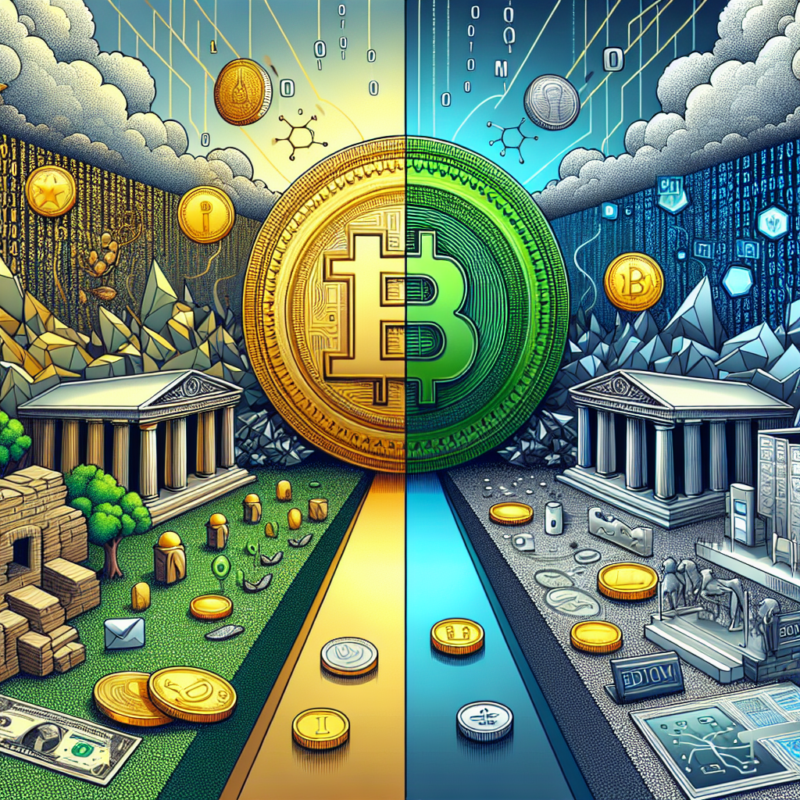
Are you curious about the rise of Bitcoin and how it compares to traditional currency? In this comprehensive guide, we will explore the differences between Bitcoin and traditional currency, and analyze the potential impact of Bitcoin on the financial landscape. Let’s delve into the world of digital currency and see how it measures up against traditional forms of money.
The Rise of Bitcoin
Bitcoin, a decentralized digital currency, was created in 2009 by an unknown person using the pseudonym Satoshi Nakamoto. Since then, Bitcoin has gained popularity as an alternative to traditional fiat currencies issued by governments. The blockchain technology underlying Bitcoin allows for secure, transparent transactions without the need for intermediaries like banks.
Benefits of Bitcoin
One of the key advantages of Bitcoin is its decentralization, which means that no central authority has control over the currency. This can lead to lower transaction fees and faster processing times compared to traditional banking systems. Additionally, Bitcoin offers a level of privacy and anonymity that is lacking in traditional financial systems.

Challenges of Bitcoin
Despite its benefits, Bitcoin also faces challenges such as price volatility and regulatory uncertainty. The value of Bitcoin can fluctuate significantly, making it a risky investment for some. Furthermore, governments around the world are still grappling with how to regulate Bitcoin and other cryptocurrencies, which could impact their widespread adoption.
Traditional Currency
Traditional currency, also known as fiat currency, is issued and regulated by governments. Examples include the US dollar, Euro, and Japanese Yen. Unlike Bitcoin, traditional currency is backed by the government that issues it and is accepted as legal tender for goods and services.
Pros and Cons of Traditional Currency
Traditional currency offers stability and widespread acceptance, making it a reliable medium of exchange. However, traditional currency can also be subject to inflation and devaluation, especially during economic crises. Additionally, traditional banking systems can be slow and costly, with fees for international transactions.
Conclusion
In conclusion, the battle between Bitcoin and traditional currency is ongoing, with each having its own strengths and weaknesses. While Bitcoin offers decentralization and privacy, traditional currency provides stability and widespread acceptance. As the world of finance continues to evolve, it will be interesting to see how Bitcoin and traditional currency coexist and shape the future of money.
Frequently Asked Questions
Q: Is Bitcoin legal?
A: The legality of Bitcoin varies by country, with some governments embracing it as a legitimate form of payment while others have imposed restrictions or outright bans.
Q: Can I use Bitcoin for everyday purchases?
A: While some merchants accept Bitcoin as payment, its use for everyday purchases is still limited compared to traditional currency.
Q: How can I buy Bitcoin?
A: You can buy Bitcoin through online exchanges or peer-to-peer platforms, using traditional currency or other cryptocurrencies.


