

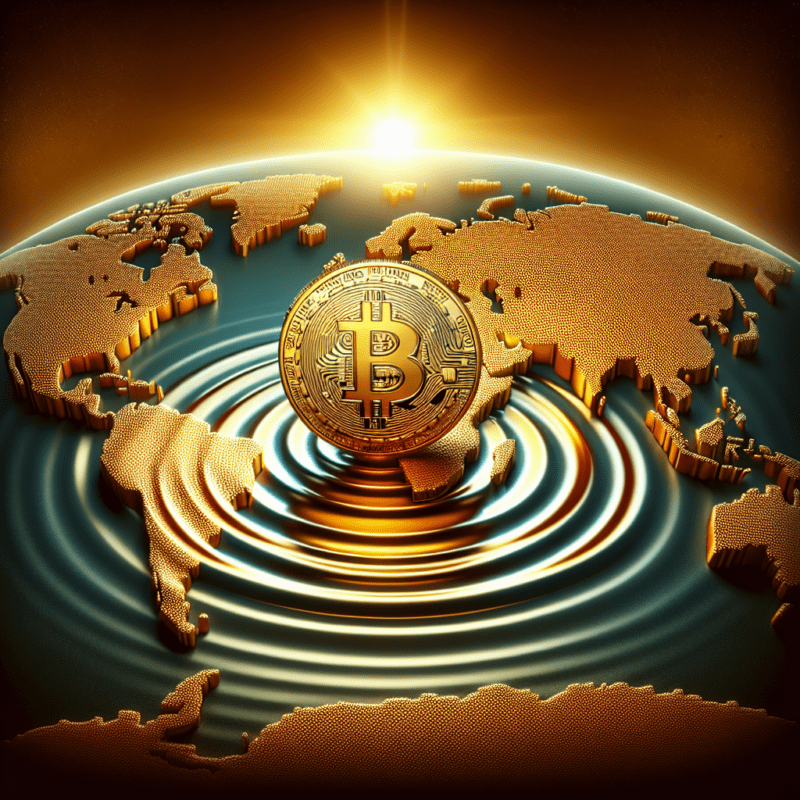
Bitcoin, the revolutionary digital currency, has been making waves in the global economy. Its decentralized nature and limited supply have sparked debates and discussions about its impact on traditional financial systems. In this comprehensive analysis, we will delve into the various ways Bitcoin is shaping the world economy.
The Rise of Bitcoin
Bitcoin was created in 2009 by an unknown person or group of people using the pseudonym Satoshi Nakamoto. Since then, it has grown in popularity and value, attracting investors, traders, and everyday users. Its decentralized nature, built on blockchain technology, has made it a disruptive force in the financial world.
Decentralization and Security
One of the key features of Bitcoin is its decentralized nature. Unlike traditional currencies that are controlled by central authorities like governments and banks, Bitcoin operates on a peer-to-peer network. This means that transactions are verified by network participants and recorded on a public ledger called the blockchain, ensuring transparency and security.

Limited Supply and Deflationary Nature
Bitcoin has a limited supply cap of 21 million coins, making it a deflationary asset. This means that as demand for Bitcoin increases, its value is likely to rise over time. This scarcity has led to Bitcoin being seen as a store of value and a hedge against inflation, especially in times of economic uncertainty.
The Impact on Global Economics
Bitcoin’s impact on global economics is multi-faceted, influencing everything from financial markets to government policies. Its role as a digital asset and a medium of exchange has implications for individuals, businesses, and economies as a whole.
Financial Inclusion
Bitcoin has the potential to increase financial inclusion by providing access to banking services for the unbanked and underbanked populations. Its low transaction fees and borderless nature make it an attractive option for remittances and cross-border payments, especially in regions with limited access to traditional banking services.
Market Volatility and Speculation
Bitcoin’s price volatility has made it a popular asset for traders and investors looking to profit from price fluctuations. While this volatility can lead to significant gains, it also poses risks for those who are not prepared for the market’s ups and downs. Regulators and policymakers are grappling with how to regulate this new asset class and protect investors from potential scams and fraud.
Conclusion
In conclusion, Bitcoin’s impact on global economics is significant and far-reaching. Its decentralized nature, limited supply, and disruptive potential make it a force to be reckoned with in the financial world. Whether you’re a Bitcoin enthusiast or a skeptic, it’s clear that this digital currency is here to stay and will continue to shape the future of economics.
FAQ
Q: Is Bitcoin legal?
A: The legal status of Bitcoin varies by country, with some governments embracing it as a legitimate form of payment and investment, while others have imposed restrictions or outright bans on its use.
Q: How can I buy Bitcoin?
A: You can buy Bitcoin on cryptocurrency exchanges, through peer-to-peer platforms, or by using Bitcoin ATMs. Be sure to do your research and choose a reputable exchange to ensure the security of your investments.